CLOSURE ARRANGEMENT
Closure Arrangement
Double Ball DBB Valves
Use this collection when the RFQ specifically calls for two ball closure elements in one DBB assembly.
Two-ball isolation
View collection →Compact Double Block & Bleed Design
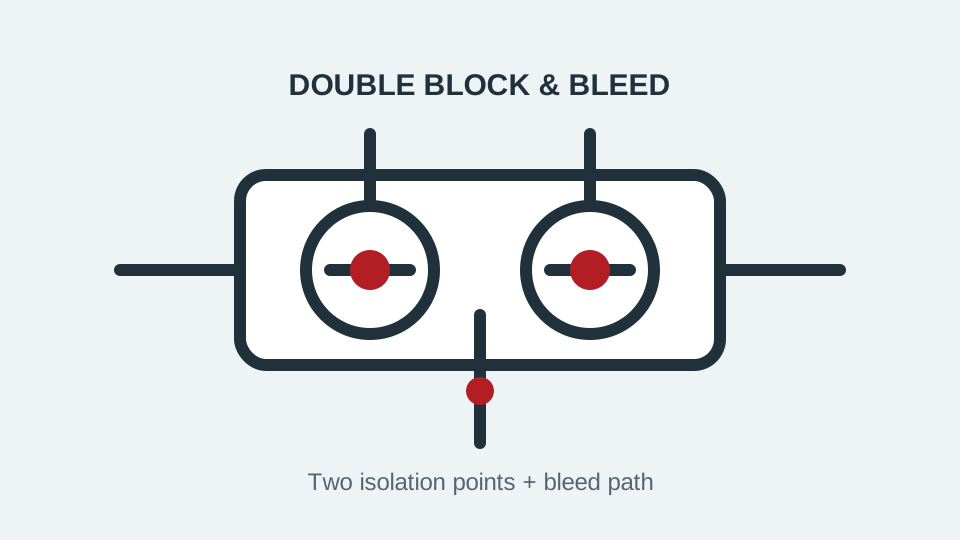
Integral DBB valves are selected when a project wants the isolation and bleed functions packaged into one compact valve assembly instead of a longer conventional spool arrangement. The main buyer value is reduced installation envelope and fewer external joints, but the exact internal arrangement still needs to match the required line function.
Related Collections
Use the related collection pages to keep valve architecture, installation function and buyer intent separate.
Closure Arrangement
Use this collection when the RFQ specifically calls for two ball closure elements in one DBB assembly.
Two-ball isolation
View collection →Pipeline Variant
Use trunnion-supported DBB construction when the line size, class and pipeline seat philosophy require it.
Pipeline DBB
View collection →Instrument Interface
For compact flange-mounted instrument hook-ups, compare monoflange construction instead of a line-size DBB valve.
Flange-mounted instrument DBB
View collection →Buyer Selection Matrix
| Body architecture | Confirm one-piece / compact integral construction required by the project and the maintenance access available around the valve. |
|---|---|
| Bore requirement | State full bore or reduced bore where the application makes this important. Do not assume the bore from the DBB label. |
| Isolation elements | Define the number and type of closure elements, seat arrangement and required isolation behavior. |
| Bleed / vent connection | Specify port size, connection type, direction and whether the bleed is manual, piped or connected to a closed system. |
| End connections | Confirm flanged, butt-weld or other project-approved interfaces and the required facing / preparation. |
Selection Logic
A conventional isolation arrangement can require multiple valves, nipples, flanges and field joints. An integral DBB assembly packages the isolation and bleed functions into one body, which can shorten the installed assembly and reduce external leak paths. That benefit is only useful when the internal valve arrangement, bore, pressure rating and bleed routing still satisfy the project specification.
Project Application
Send the line number or P&ID reference together with size, pressure class, body material, trim/seat requirements, bore, end connections, bleed port details, operating method, service conditions and required tests. If the valve replaces a conventional multi-valve spool, provide the available face-to-face envelope and any weight or support constraints.
For final selection, use the project valve specification, piping class, instrument hook-up drawing or approved datasheet as the controlling document.
Factory & Quality Evidence
Buyers can review YINKE VALVE factory information, quality documents, sample inspection records and project references before technical and commercial confirmation.
Buyer Questions
The typical reason is to reduce installed length, external joints and assembly weight while keeping two isolation points and a bleed function in one compact unit.
Not necessarily. Integral describes the compact combined construction. The RFQ should still identify the required internal closure arrangement.
Yes when space is constrained or the DBB valve replaces an existing spool. Give the available envelope or required dimensional standard where applicable.
RFQ Checklist
Technical data is confirmed against the final quotation, approved drawings and project specification.
Send the valve list, datasheet, P&ID or instrument hook-up drawing for technical and commercial review.