FLANGE-MOUNTED INSTRUMENT DBB
Flange-Mounted Instrument DBB
DBB Monoflange Valves
Choose monoflange construction when the instrument isolation assembly mounts directly to a process flange or nozzle.
Direct flange interface
View collection →Process-to-Instrument Isolation
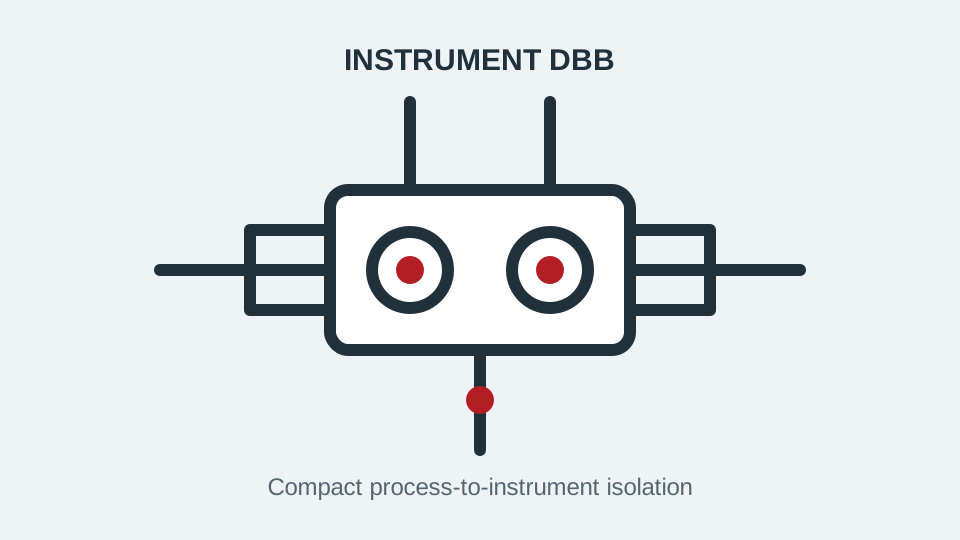
Instrument DBB valves bring two isolation functions and a bleed path close to a pressure gauge, transmitter, analyzer or sampling connection. The main design questions are not pipeline bore and pigging, but process interface, instrument outlet, valve element type, bleed direction, material compatibility and safe access for operation.
Related Collections
Use the related collection pages to keep valve architecture, installation function and buyer intent separate.
Flange-Mounted Instrument DBB
Choose monoflange construction when the instrument isolation assembly mounts directly to a process flange or nozzle.
Direct flange interface
View collection →Process Line DBB
For larger line isolation rather than instrument hook-up, compare integral DBB valve construction.
Process line isolation
View collection →Parent Collection
Compare all DBB valve families before fixing the architecture.
All DBB designs
View collection →Buyer Selection Matrix
| Process inlet | Confirm flange, thread, tube or other approved process connection and its pressure / temperature rating. |
|---|---|
| Instrument outlet | Specify the exact outlet thread or connector required by the gauge, transmitter or manifold system. |
| Block valve elements | Define ball, needle or project-approved closure elements and the required stem / bonnet arrangement. |
| Bleed / vent outlet | State size, thread, discharge direction and whether the bleed is open, capped or piped to a closed system. |
| Material compatibility | Match body, trim, packing and seals to the process fluid, corrosion requirements and temperature range. |
Selection Logic
A compact DBB instrument valve can replace several separately connected block and bleed components around the tapping point. This can simplify the hook-up, but buyers still need to define connection orientation, accessible stem positions, bleed discharge direction and the exact instrument interface. Those details are often more important than a generic valve size description.
Project Application
Provide the instrument tag, process fluid, design pressure/temperature, process connection, instrument outlet, bleed connection, body/trim/packing material, valve element preference, mounting orientation and any requirements for lockable handles, anti-tamper devices, vent plugs, tube fittings or certification. A hook-up drawing is especially useful.
For final selection, use the project valve specification, piping class, instrument hook-up drawing or approved datasheet as the controlling document.
Factory & Quality Evidence
Buyers can review YINKE VALVE factory information, quality documents, sample inspection records and project references before technical and commercial confirmation.
Buyer Questions
They are used around gauges, pressure transmitters, analyzers, sampling points and other process-to-instrument connections where two isolation functions and a bleed point are required.
Not always. A monoflange is one flange-mounted form of compact instrument DBB assembly. Instrument DBB valves can use other process interfaces.
The exact process inlet, instrument outlet and bleed connection are critical because they determine whether the valve can be installed directly into the intended hook-up.
RFQ Checklist
Technical data is confirmed against the final quotation, approved drawings and project specification.
Send the valve list, datasheet, P&ID or instrument hook-up drawing for technical and commercial review.