INTEGRAL BODY
Integral Body
Integral DBB Valves
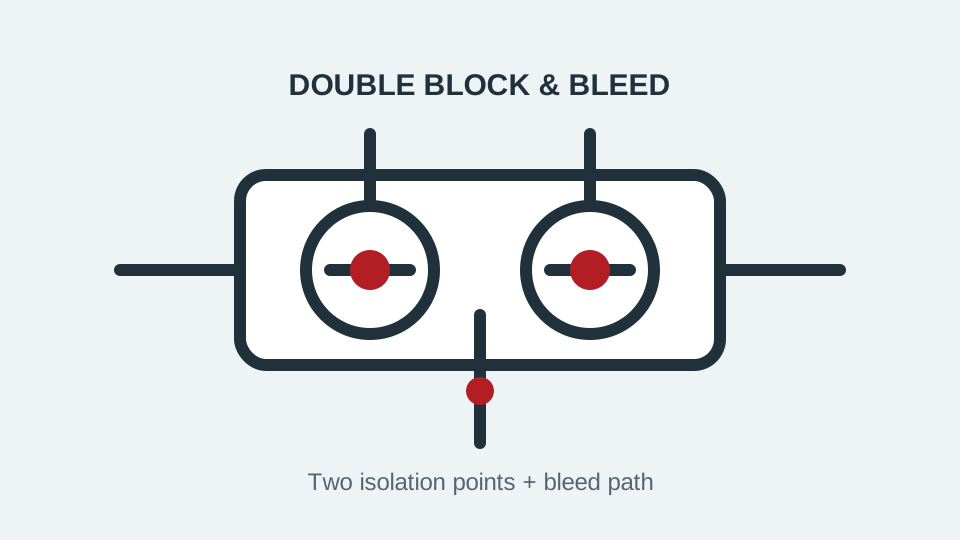
Compact body architecture that combines two isolation points and a bleed path to reduce external joints and installation envelope.
Compact process and pipeline isolation
View collection →Isolation & Bleed Valve Collections
Use this DBB collection to choose the valve architecture before pressure class, materials and end connections are fixed. Compare integral, double ball, trunnion mounted, instrument and monoflange designs by installation space, line function, isolation philosophy and maintenance access.
Related Collections
Use the related collection pages to keep valve architecture, installation function and buyer intent separate.
Integral Body
Compact body architecture that combines two isolation points and a bleed path to reduce external joints and installation envelope.
Compact process and pipeline isolation
View collection →Two Ball Closures
Two ball closure elements with a bleed cavity between them for positive isolation arrangements defined by the project specification.
Two closures + bleed cavity
View collection →Pipeline DBB
DBB configurations based on trunnion-supported ball construction for pipeline duties where size, pressure class and seat philosophy drive selection.
Pipeline and higher-duty isolation
View collection →Instrument Connection
Compact block-and-bleed assemblies for gauges, transmitters, sampling and pressure instrument hook-ups.
Gauge / transmitter / sampling
View collection →Flange-Mounted DBB
Flange-mounted compact DBB assemblies that connect process isolation and instrument take-off at the nozzle with fewer external joints.
Direct process flange interface
View collection →Buyer Selection Matrix
| Reduce external joints in a process line | Start with an integral DBB design and confirm bore, end connections, bleed arrangement and operator layout. |
|---|---|
| Two ball closures in one assembly | Review a double ball DBB design and define the required cavity, bleed port and independent isolation behavior. |
| Pipeline / larger-bore project duty | Review trunnion mounted DBB valves and confirm seat design, cavity pressure relief and project testing requirements. |
| Gauge or pressure transmitter take-off | Use instrument DBB valves where a compact isolation-and-bleed hook-up is required close to the instrument. |
| Direct connection at a process flange | Use a DBB monoflange when the project wants a compact flange-mounted instrument isolation assembly. |
Selection Logic
“Double block and bleed” describes an isolation function, but the physical valve arrangement can be very different. A pipeline DBB ball valve, a compact integral DBB assembly and a monoflange instrument valve solve different installation problems. The RFQ should therefore define the line function, required isolation arrangement, bleed destination, seat philosophy where relevant, end interfaces and project test criteria rather than relying on the DBB label alone.
Project Application
Start with the P&ID and piping or instrument datasheet. State whether the valve is for line isolation, meter/skid isolation, sampling, gauge connection or transmitter hook-up. Then add size, pressure class or flange rating, body/trim material, bore requirement, end connections, operation, bleed connection, service fluid, design pressure/temperature and documentation scope.
For final selection, use the project valve specification, piping class, instrument hook-up drawing or approved datasheet as the controlling document.
Factory & Quality Evidence
Buyers can review YINKE VALVE factory information, quality documents, sample inspection records and project references before technical and commercial confirmation.
Buyer Questions
Integral DBB describes a compact body concept that combines the isolation and bleed functions. Double ball DBB specifically emphasizes two ball closure elements. A double ball valve can be integral, but the two search intents are not identical.
No. Instrument DBB valves are normally selected around compact process-to-instrument hook-up requirements, while pipeline DBB ball valves are selected around line size, pressure class, bore, seat design and pipeline isolation requirements.
For ball-valve DBB applications, confirm the required isolation behavior, seat arrangement, cavity pressure relief philosophy and any project-specific interpretation of DBB or DIB. The project specification should control the final configuration.
RFQ Checklist
Technical data is confirmed against the final quotation, approved drawings and project specification.
Send the valve list, datasheet, P&ID or instrument hook-up drawing for technical and commercial review.